
02Multifamily
Energy assessments and testing for apartment and condo buildings
ARUS assesses and tests apartment buildings, condos and HOA properties in Colorado. We measure the building and rank the upgrades by what they do. We help you plan the work and find rebates. Then we test the result. We have no sales team, so the plan serves your building, not a sales target.
01Why ARUS
Independent advice from certified building scientists
- 30,000+energy assessments across the West, most of them in homes so far
- 2017founded in Fort Collins, Colorado, and family-owned
- 0salespeople. Our advisors are certified building scientists who give independent advice.
Multifamily work builds on that assessment experience.
02Services
What we do for multifamily owners and managers
Start with an assessment. Add the rest when you need it.
- 01Energy AssessmentsA look at the whole building and a sample of units. We check the envelope, heating, hot water and ventilation. You get a ranked plan. Audits follow ASHRAE Level 2, and Level 3 when a project needs it.
- 02Project Assistance and AdvisingHelp turning the plan into a phased scope of work. We also compare bids and test the finished work.
- 03Rebates and Utility ProgramsWhich utility and state programs fit an apartment or condo building. And what must happen before work starts.
- 04Blower Door TestingAir leakage tests in single units and whole buildings. On large buildings we test a sample of the units.
- 05Duct Leakage TestingPressure tests on the ducts that serve each unit. We can do them alone or in the same visit as the air test.
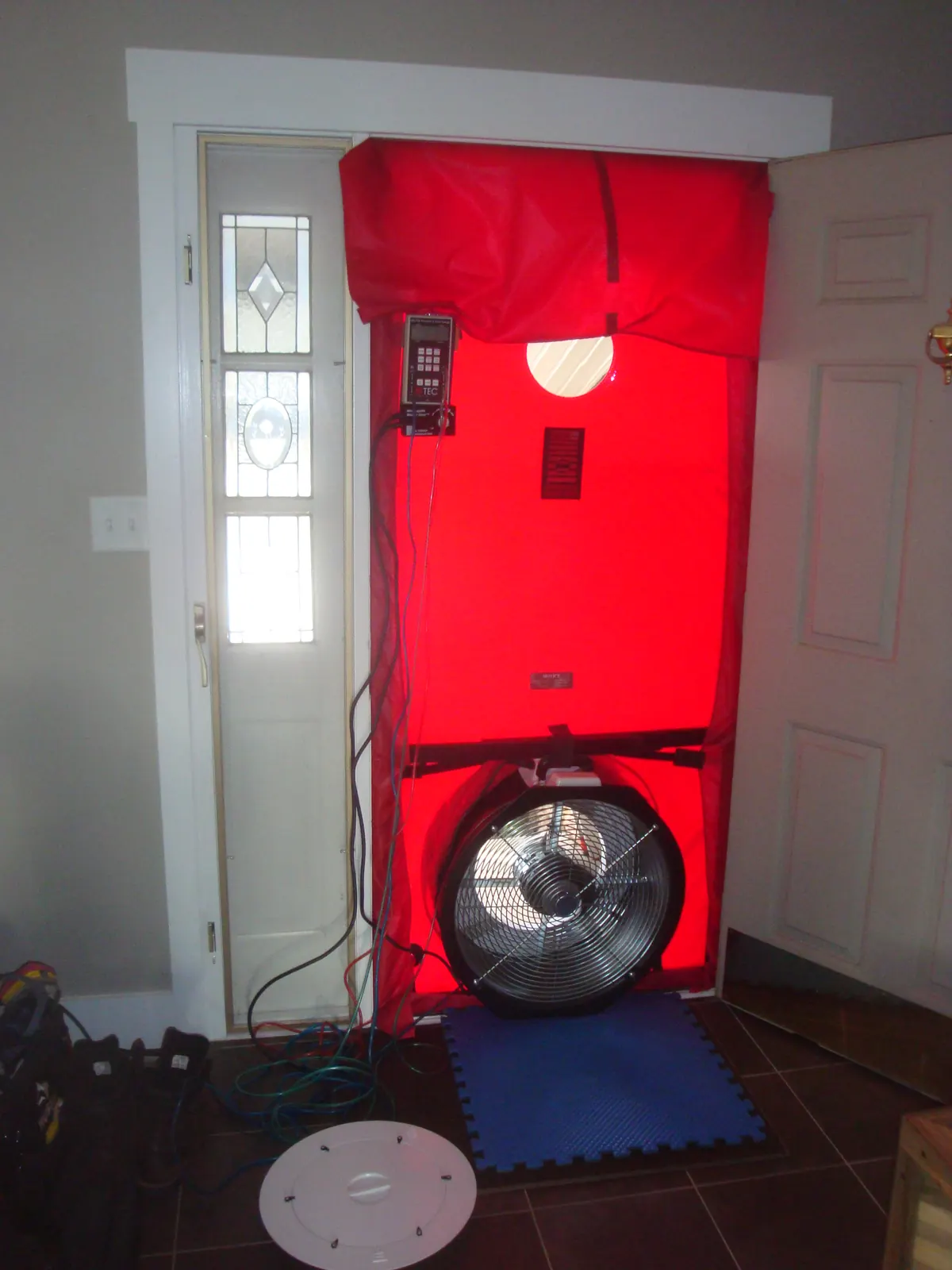
In the field
The blower door goes in a doorway and pulls air out of the building.
A blower door set up in a doorway, ready for a test.
03Who it is for
Buildings and owners we work with
Who it is for
- Apartment owners and property managers, from garden-style complexes to mid-rise buildings.
- HOA boards and condo associations with shared roofs, boilers and common areas.
- Affordable housing providers who need a plan that fits a program's rules.
- Developers adding units. New buildings have their own testing path, covered by New Construction.
When you need it
- Utility bills for common areas are climbing and nobody can say why.
- Residents report cold units, drafts or uneven heat.
- You are planning capital work and want to know what to do first.
- A state or city benchmarking deadline applies to your building.
- A rebate program asks for an assessment or a test report.
04Project assistance and advising
From assessment to finished work, in phases
A good assessment still leaves you with a long list. This is how we help turn the list into work that gets done. The order fits your budget and your residents.
Turn the findings into phases
We group upgrades by building, system and cost. Quick fixes that pay back fast come first. Big equipment comes later, timed to when it needs replacing.
Write a scope of work
Each phase gets a plain scope. It says what is done, where, to what standard and how it will be tested. Contractors bid on the same thing, so you can compare prices.
Review the bids
We read each bid against the scope. We point out gaps, missing items and unclear terms.
Line up the rebates first
Some programs must approve a project before you buy any equipment. We check each phase against the programs below. That way you do not lose a rebate by starting too early.
Test after the install
We test the finished work with the same tools we used in the assessment, such as a blower door and infrared camera. Then you know it did its job.
What you receive
- A phased upgrade plan by building and system
- A scope of work for each phase that contractors can bid
- A bid comparison with questions to ask each contractor
- A rebate checklist for each phase, with approval steps
- A post-install test report
05Working around residents
Plans that respect people who live in the building
Residents notice every disruption. A good plan keeps entry into units to a minimum. It tells people what is coming and when.
We plan the order of work so most upgrades happen in common areas, on roofs and in mechanical rooms first. We save unit entry for work that cannot happen anywhere else. On large buildings we usually test about 10% of the units, with a sample of each unit type. Some programs require a blower door on every unit at the same time. Others let us test one unit.
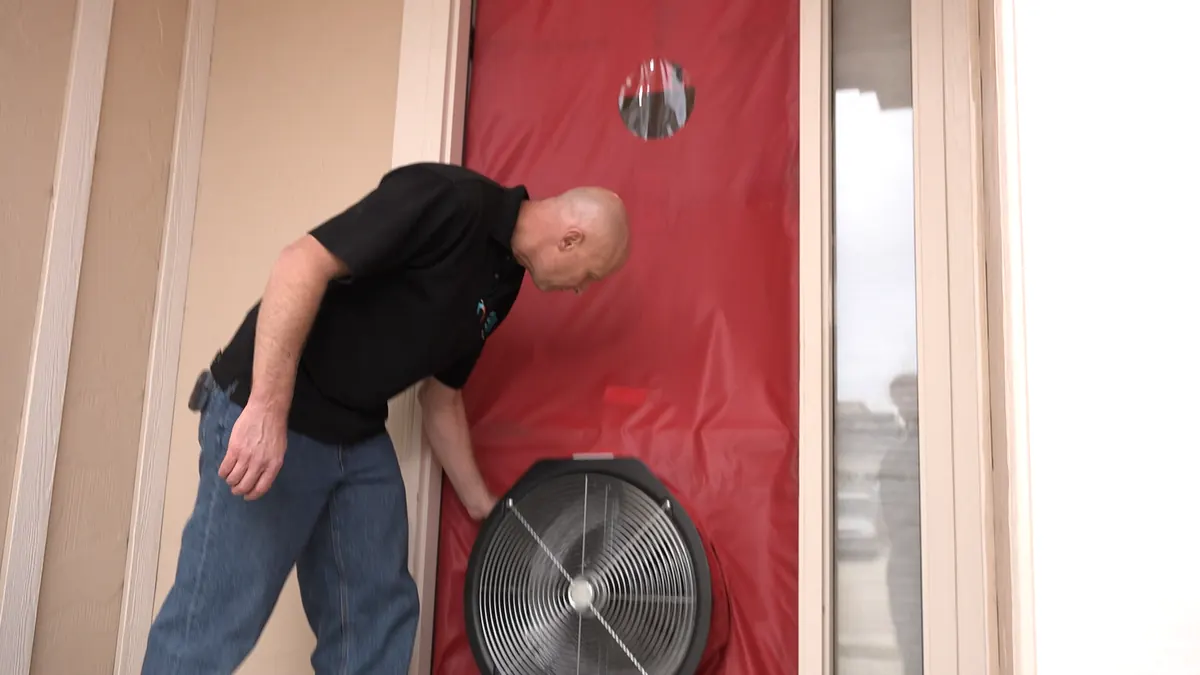
In the field
A fan in the doorway measures how leaky the building is.
A blower door fan mounted in a red panel in a doorway.
06Rebates and utility programs
Programs that can help pay for multifamily upgrades
Which program fits depends on who supplies your electricity and gas, how many units are in each building and who lives there. Rules and amounts change. Each row links to the program's own page and shows the date we last checked it.
Xcel Energy Multifamily Building Efficiency
How it worksFor buildings with five or more units, market rate or income-qualified, with Xcel electric or gas service. An owner or an HOA board must manage the building. It starts with a free assessment by Xcel's program contractor. Then you get free products such as LED lighting and low-flow fixtures. There are also rebates for common areas and efficient heating and cooling equipment.
Source: Xcel Energy, multifamily building page, checked Nov 16, 2026Efficiency Works Multifamily (Fort Collins, Loveland, Longmont, Estes Park)
How it worksFor buildings with five or more units and a commercial electric meter. A program energy advisor does a free, no-obligation assessment. You get a report of opportunities and rebates. Support covers common areas and units. Buildings with fewer than five units use the home rebates instead.
Source: Efficiency Works, multifamily properties, checked Nov 16, 2026Energy Outreach Colorado, Multifamily Energy Efficiency
How it worksFor affordable housing. At least 66 percent of units must have residents earning at or below 80 percent of the Area Median Income. The steps are assessment, funding, management and inspection. New construction is not eligible now.
Source: Energy Outreach Colorado, multifamily, checked Nov 16, 2026Poudre Valley REA
How it worksPVREA has no multifamily page of its own. Its business rebates need membership. You buy first, then apply with receipts within 90 days. Ask PVREA whether your building fits.
Source: PVREA, business rebates, checked Nov 16, 2026
Federal tax credits for home audits and home upgrades ended under Public Law 119-21, so we do not promise one. See Programs and Partners for the utilities and programs ARUS works with.
07Deadlines
Rules that may apply to your building
Some owners must benchmark energy use every year. We help gather the data and file the report. Check the date and size that apply to your building.
We describe what each source says. This is not legal advice. The sources state penalties as amounts that may be charged.
08Independent
We test the building and tell you what we find
Every multifamily recommendation starts with a measurement. ARUS has no sales team.
Request a consultationWhat do I get at the end?
A ranked, phased plan by building and system. Scopes of work you can send to contractors. A list of rebates with their approval steps. Afterward we can test the finished work to confirm it did its job.
Which rebates and programs apply to my building?
It depends on your utility, the number of units per building and the income mix of residents. Xcel Energy and Efficiency Works both run multifamily programs for buildings with five or more units. Our programs section above links each one.
Are you independent? Do you sell or install anything?
ARUS has no sales team. Our advisors are certified building scientists who give independent advice.
Do I have a deadline?
Possibly. Colorado benchmarking applies to most buildings of 50,000 square feet and up, due each November 1. Denver and Fort Collins have their own rules. The deadlines section above lists each one with its source.
10Keep going
Another kind of building?
Talk to us about your property
Tell us about the building or the portfolio, and what you need from it.
Monday to Friday, 8:00am to 5:00pm. Based in Fort Collins, Colorado.