
01Residential
A home energy audit that tests your house, not guesses at it.
A home energy audit, also called an assessment, is a full inspection of how your house uses energy. ARUS looks at the outside, the insulation, the heating equipment and the crawl space. We run a blower door test with infrared imaging and check for carbon monoxide. You get a written report with ranked upgrade advice.
01What it includes
Six parts, all in one visit.
- 01
Exterior, insulation and mechanical inspection
We look at the outside of the house, the insulation in the attic and walls, and the age and condition of your furnace, water heater and air conditioner.
- 02
Crawl space inspection
Crawl spaces are where moisture, drafts and missing insulation often hide. We go in and look.
- 03
Blower door test with infrared imaging
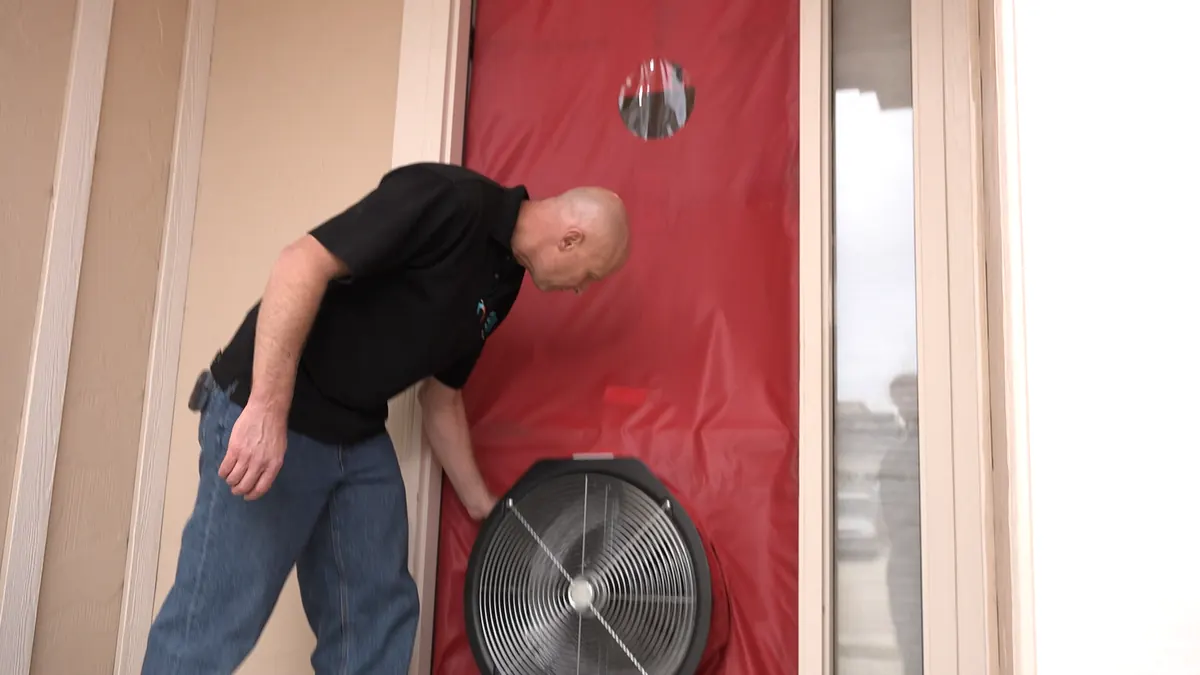
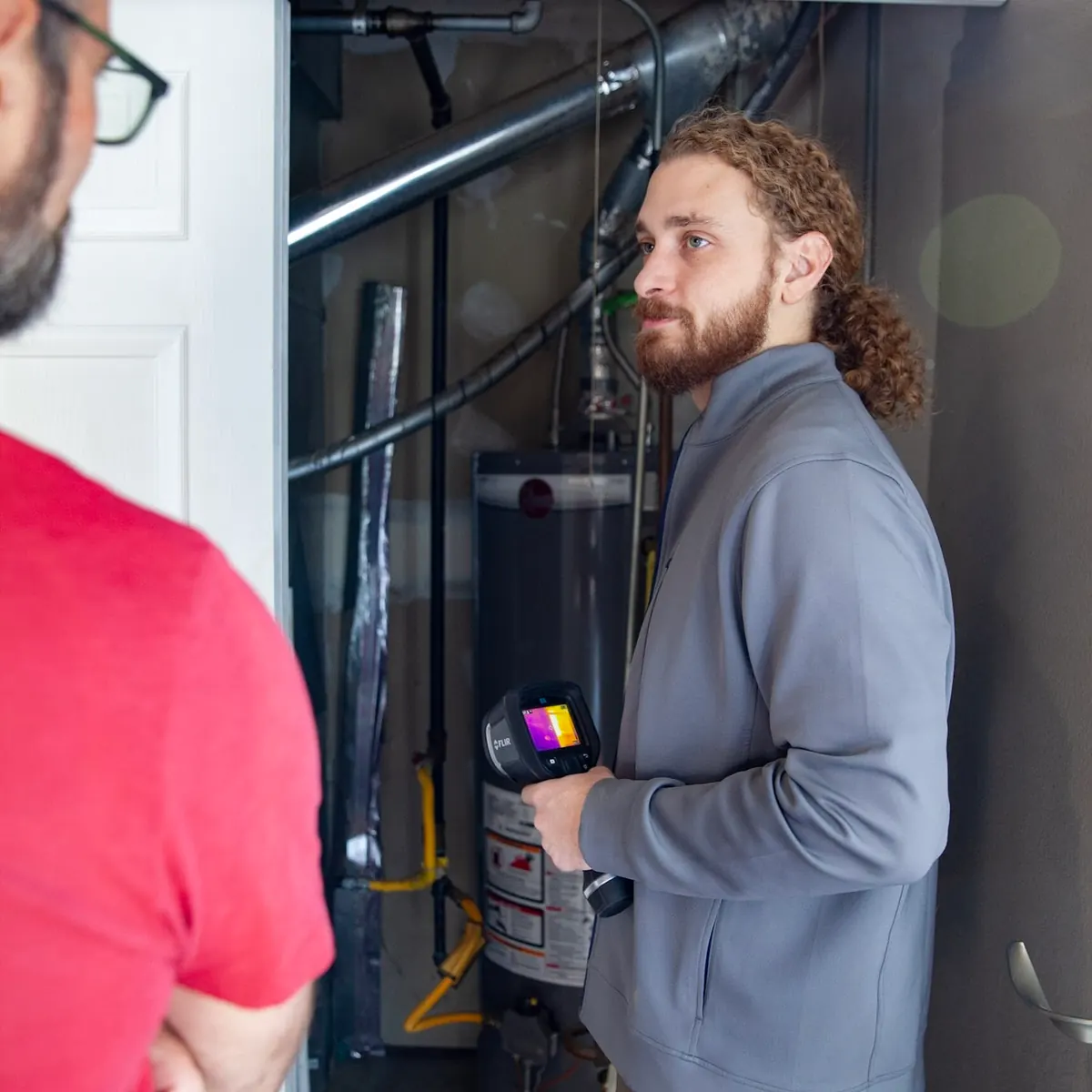
A fan in the doorway pulls air out of the house. An infrared camera then shows where outside air is coming in.
- 04
Combustion safety and carbon monoxide checks
We check that gas appliances vent the way they should and test for carbon monoxide.
- 05
Radon testing
Radon is a gas from the soil.
02Inside the house
We open the closets most people never look in.
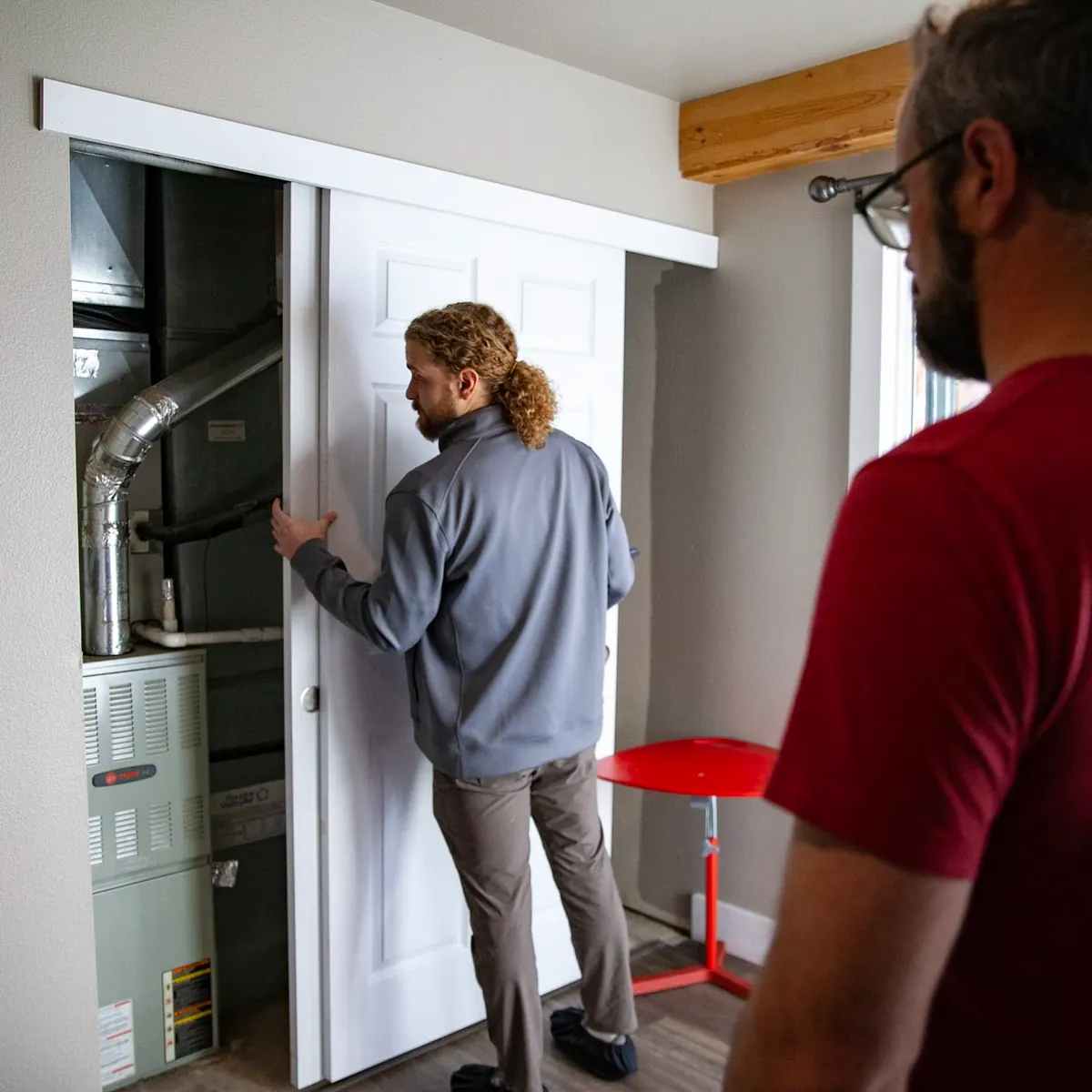
The furnace, water heater and ductwork use more energy than anything else in the house. We open the mechanical closet and look at each one.
We note the age, the make and the condition. A furnace that is old but safe is a different problem than one that is unsafe.
This is the part of the visit where we find the hidden problems. A duct that is not connected to anything. A vent pipe that is not sealed.
In the field
A fan in the doorway measures how leaky the building is.
A blower door fan mounted in a red panel in a doorway.
03Safety
Combustion safety is not optional.
Gas furnaces and water heaters make exhaust. That exhaust should leave through the vent pipe. When a house is sealed tighter or a fan pulls air, exhaust can come back in.
We check how your gas equipment vents and test for carbon monoxide. If we find a safety problem, we tell you before anything else.
This matters most before air sealing. A tighter house needs equipment that vents right.
04How it works
From booking to a report in your hands.
Book your visit
Call us or send the form. Tell us your address and your electric and gas companies so we can check for rebates.
Get the house ready
Clear a path to the furnace, water heater, attic hatch and crawl space. Have your last year of energy bills handy if you can.
We inspect and test
We walk the house inside and out, run the blower door and infrared scan, and run the safety checks.
We go over it with you
We explain what we found in plain words before we leave, or soon after.
You get the report
A written report with ranked upgrade advice.
What you receive
- Findings from every test, in plain words
- Upgrade recommendations in order of importance
- Which rebates apply to your address
05Is it for you
Who should book one, and when.
Who it is for
- Owners of single-family homes, including older homes and homes with additions
- Homeowners who are not sure what to fix first
- Anyone with a drafty house, uneven temperatures or a high bill
- Buyers and owners who want a clear picture of the house
When you need it
- Before you spend on insulation, air sealing or windows
- Before you replace a furnace, air conditioner or water heater
- When a utility program asks for an assessment before rebates
- After a contractor quote you are not sure about
What an infrared camera sees
Brighter means warmer.
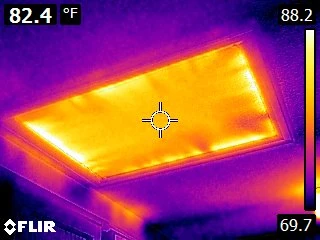 Attic hatch
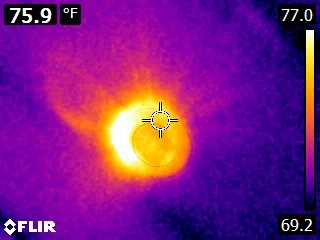 Recessed light
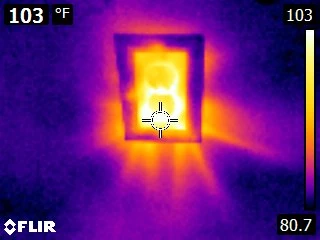 Wall outlet
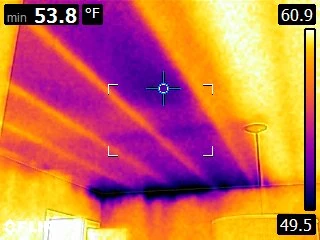 Ceiling joists
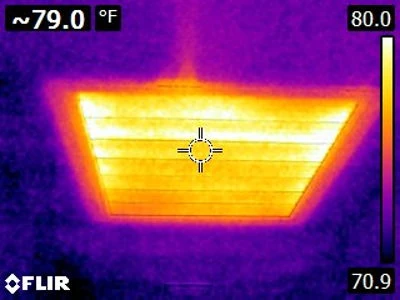 Whole-house fan
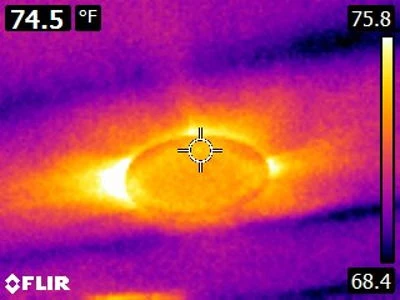 Ceiling fixture
Infrared images from home visits.
06Lower the cost
Your utility may help pay for an assessment.
Xcel Energy
How it worksXcel's page says you pay the auditor first, then Xcel pays a rebate worth 60 percent of the audit price, up to a cap set by the test level. Xcel lists $100, $160 or $200.
Source: Xcel Energy, Home Energy Audit, checked Nov 13, 2026Efficiency Works
How it worksFor homes with electric service from Fort Collins, Loveland, Longmont or Estes Park. The program lists its assessment at $0 to $60.
Source: Efficiency Works, advising and assessments, checked Nov 13, 2026
The federal tax credit that covered part of an audit ended for costs paid after December 31, 2025.
What is a home energy audit, and is it the same as an assessment?
Yes, the two names mean nearly the same thing. It is a full inspection of how your house uses energy, with tests like a blower door and infrared imaging, plus a written report. Some programs use one word and some use the other.
What does a home energy audit consist of?
It covers the outside of the house, insulation, heating and cooling equipment, the crawl space, a blower door test with infrared imaging, and combustion safety and carbon monoxide checks. You get a report with upgrade advice.
How long does a home energy audit take?
It depends on the size and age of the house. Efficiency Works says its assessments take two to four hours, depending on the home.
How much does a home energy audit cost?
Utility programs can lower it. Efficiency Works lists its assessment at $0 to $60. Xcel pays a rebate after you pay the auditor.
Is a home energy audit worth it?
It is worth it when you plan to spend money on the house. The audit shows which fixes matter and which do not, so you do not pay for upgrades that will not help. It also checks for safety problems.
Are home energy audits a scam?
Some companies give a cheap audit to sell you work. ARUS has no sales team and does not sell the upgrades. Our advisors are certified building scientists, and the advice is independent.
How do I prepare for a home energy audit?
Clear a path to the furnace, water heater, attic hatch and crawl space. Keep pets in one room. Have recent energy bills ready if you can. We will send a checklist when you book.
Do I need an assessment before I get rebates?
Sometimes. Efficiency Works requires an assessment only for insulation and air sealing rebates, and it must come before the work. Xcel's audit has its own rebate. We can tell you for your address.
08Keep going
Related services
More from Residential
The same service, other buildings
Schedule your home energy assessment
Tell us your address and your utility. We will match you to the right program.
Monday to Friday, 8:00am to 5:00pm. Based in Fort Collins, Colorado.