
04New Construction
Blower door testing for new construction
A blower door test measures how much air leaks through a new home's walls, roof and floor. In Larimer County and Fort Collins the code limit is 3 air changes per hour at 50 pascals (3 ACH50). ARUS owns blower door equipment and is adding code testing now, so it is not offered yet. Tell us about your project and we will tell you where we are.
01The standard
The code limit, by jurisdiction
ACH50 means air changes per hour when the house is held at 50 pascals of pressure. It is how many times the air in the home would be replaced in one hour. Lower is tighter.
Fort Collins and Larimer County tester rules differ. Check with your building department which testers it accepts, and ask any tester for proof of approval.
02When to test
Test at the right moment
Pre-test before drywall
Optional, and worth it. A fan in the door shows leaks while you can still reach them. The air barrier and framing should be done.
Final test
The code test is done when the building is substantially complete, usually after drywall, windows and doors, and before the certificate of occupancy.
Report
The tester records the result against the limit and writes the report.
What you receive
What a test report shows
- The test number at 50 Pa and the limit beside it
- Pass or fail
- Notes on likely leak spots if it fails
03How to prep
Get the house ready for the fan
- 01
Finish the shell
Windows, exterior doors and penetrations should be installed and sealed.
- 02
Close the openings
Plumbing and wiring holes should be sealed. Fireplace dampers should be shut. Attic hatches should be closed.
- 03
Set up the house for the test
Temporary seals come off or stay on as your jurisdiction's protocol says. Follow the building department's rules for what counts as the tested envelope.
- 04
Make access easy
Clear a door for the fan. Keep the power on if you can.
- 05
Know the garage rule
Fort Collins requires a separate isolation test of an attached garage.
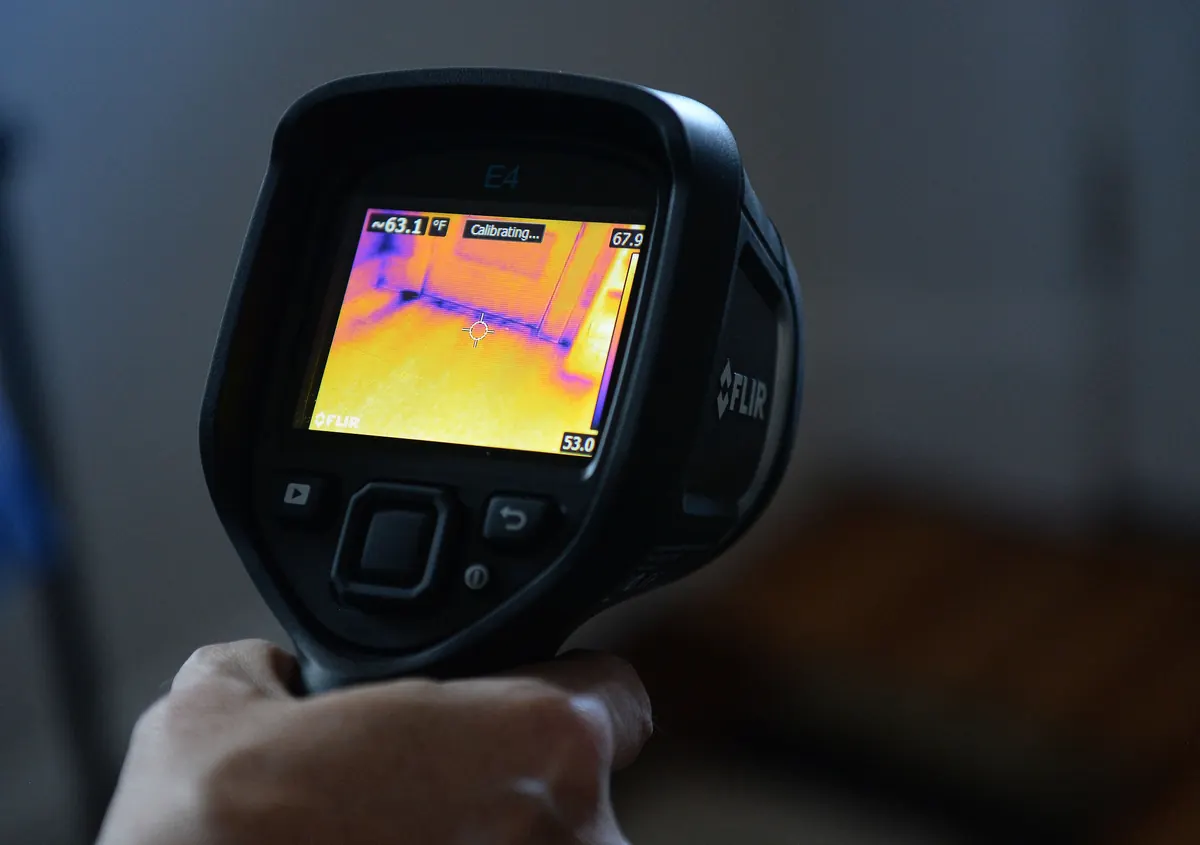
In the field
An infrared camera shows where outside air is getting in.
An infrared camera, its screen showing a thermal image of a wall.
04If you fail
What happens if the home fails
A fail means the number was higher than the limit. It is a fixable problem.
A tester finds where the air is getting in, often with a smoke pencil or an infrared camera while the fan runs. You seal the leaks, then retest. Common spots are rim joists, top plates, attic hatches, recessed lights, window gaps and wall openings for plumbing and wires.
Most building departments will not sign off until the home passes.
To avoid the second visit, see project assistance and advising.
05Who it is for
Who needs a blower door test
Who it is for
- Home builders in Larimer County and Fort Collins
- General contractors who manage the final inspection
- Owners building a custom home
When you need it
- Before the certificate of occupancy
- Before drywall, as a pre-test
- After sealing work, as a retest
When should a blower door test be done on new construction?
Do an optional pre-test before drywall, while leaks are easy to reach. Do the code test when the home is substantially complete and before the certificate of occupancy.
Is a blower door test required?
In Larimer County and Fort Collins, yes. Larimer County requires air leakage testing for all new residences. Fort Collins requires it for every residential compliance path.
What are the IECC blower door test requirements?
The IECC requires new homes to be tested and to stay under a maximum leakage rate. Jurisdictions set the number. Larimer County uses 3 ACH50. Fort Collins uses 3.0 ACH50 or 0.16 cfm50 per square foot.
What is 3 ACH50 and what is a good ACH50?
3 ACH50 means the home's air would be replaced three times an hour at 50 pascals of pressure. A lower number is tighter. In Larimer County 3 is the limit, so a number under 3 passes.
What happens if you fail a blower door test?
You find and seal the leaks, then test again. Most building departments will not sign off until the home passes.
Blower door test before or after drywall?
Both can help. A pre-test before drywall lets you seal leaks easily. The final test comes after the home is substantially complete.
Who does blower door tests?
Your jurisdiction decides who may test. Larimer County says an approved third party. Fort Collins accepts RESNET raters, BPI professionals or others the Building Official approves. ARUS is adding code testing and getting its certifications now.
07Keep going
Related services
More from New Construction
The same service, other buildings
Get a quote for your project
Tell us the jurisdiction, the stage and how many homes or units.
Monday to Friday, 8:00am to 5:00pm. Based in Fort Collins, Colorado.